
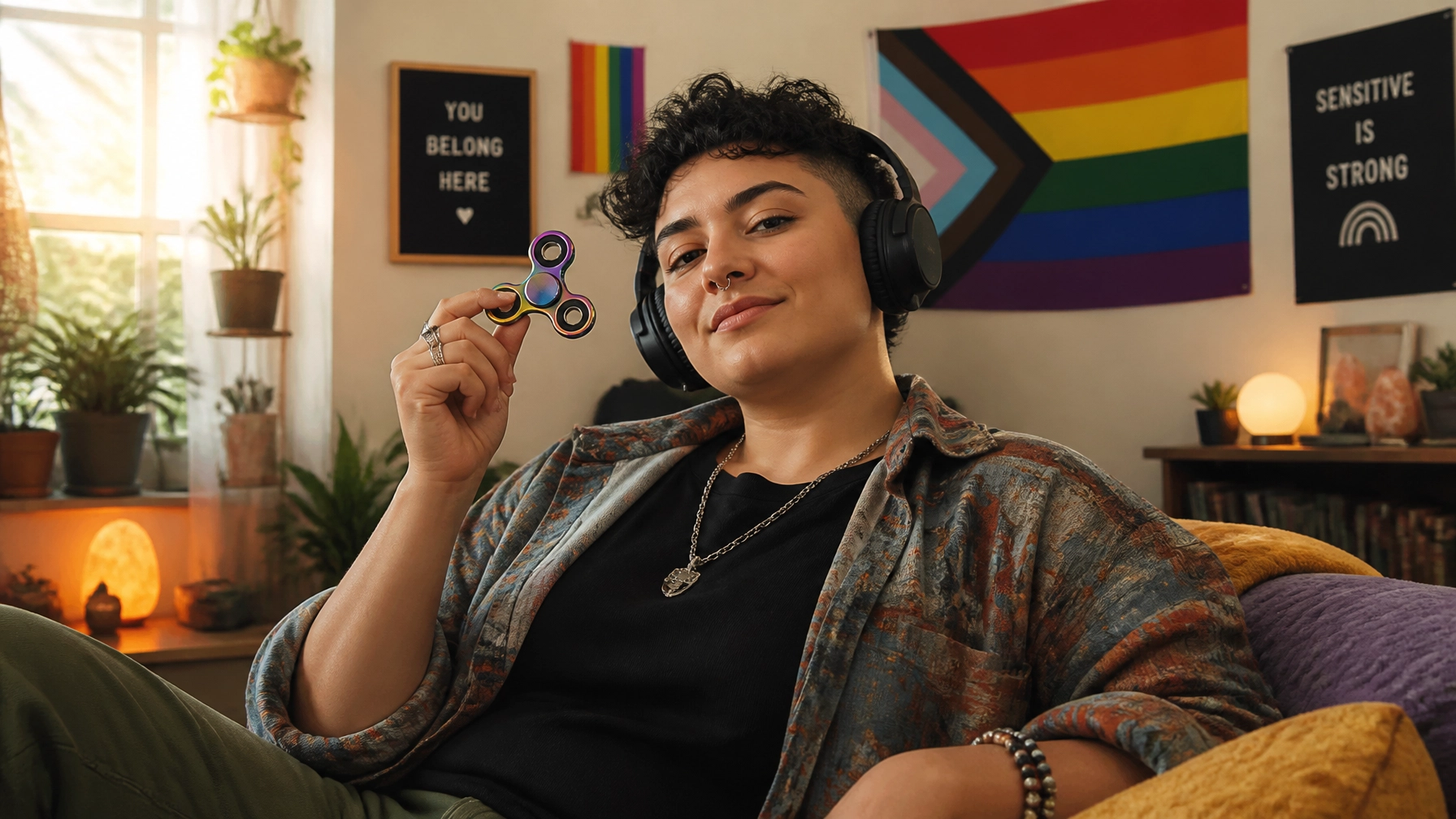
If you’re navigating the world as both transgender and neurodivergent (ADHD, autistic, or otherwise neuro-spicy), you already know that life doesn’t happen in separate boxes. Your sensory needs, your executive functioning, and your gender identity are all woven together into one beautiful, complex person.
But while you live your life at this intersection, the world, especially the healthcare world, often struggles to keep up.
Maybe you’ve sat in a doctor’s office with buzzing fluorescent lights that make your skin crawl, while a provider asks if your gender identity is "just a special interest" of your autism. Or perhaps you’ve tried to find gender-affirming healthcare near me, only to realize the "inclusive" clinic has a phone-only scheduling system that feels like an impossible hurdle for your ADHD brain.
At Trans Friendly Shops, we believe you shouldn't have to choose which part of yourself to bring to an appointment. You deserve care that sees all of you. Let’s dive into how to navigate this intersection, find truly transgender friendly businesses, and advocate for the sensory-friendly care you deserve.
The "Double Burden" of Misunderstanding
The intersection of being trans and neurodivergent is often called "neuroqueer." Research shows that there is a significant overlap between these communities. Many autistic and ADHD folks find that their relationship with gender is different from the "standard" neurotypical experience.
However, this overlap often creates a "double burden" in healthcare settings:
- Identity Invalidation: Some providers fall into the trap of "diagnostic overshadowing." They might suggest that your trans identity is a symptom of your neurodivergence, or that you aren't "capable" of knowing your own gender because of your ADHD or autism. This is not supported by science, but it’s a very real barrier many of us face.
- Fragmented Care: You might find an autism specialist who knows nothing about gender-affirming care, or a gender clinic that is a sensory nightmare. Finding a place that understands both is like searching for a needle in a haystack.
This is why an inclusive business directory is so vital. It’s not just about finding a doctor; it’s about finding a space that has already done the work to be welcoming.

Sensory Safety is Healthcare
For many neurodivergent trans people, sensory experiences are deeply tied to gender dysphoria and euphoria.
A binder might help with chest dysphoria, but the texture or compression might be a sensory trigger. Hormonal changes might shift how your skin feels or how you react to smells. In a medical setting, the "small" things, the smell of antiseptic, the coldness of a stethoscope, or the bright lights, can lead to sensory overload, making it impossible to communicate your needs.
What Sensory-Friendly Care Looks Like
When looking for lgbtq friendly businesses in our directory, here are some sensory-friendly features to keep an eye out for:
- Dimmable or Natural Lighting: Avoiding those harsh, flickering overheads.
- Clear Communication: Providers who explain exactly where and how they will touch you before it happens.
- Flexible Waiting Options: The ability to wait in your car and receive a text when they are ready, rather than sitting in a noisy waiting room.
- Non-Gendered Gowns: Because dysphoria shouldn't be part of a check-up.
Navigating the Healthcare System
Finding gender-affirming healthcare near me is step one, but making that care work for your neurodivergent brain is step two. Here are some practical tips for your next visit:
1. Create an "Access Needs" Script
You don’t have to explain your entire life story every time. Having a pre-written note can take the pressure off your social battery.

Try a script like this:
"Hi, I’m [Name]. I’m trans and neurodivergent. To make this visit successful, I need a few accommodations: please explain what you’re doing before you touch me, use my chosen name/pronouns, and if possible, can we turn down the overhead lights? I’ve also written my main concerns down so I don't forget them."
2. Use Written Communication
If you struggle with processing verbal information (especially when stressed), ask your provider to write down their instructions or email them to you. Many transgender friendly businesses are happy to use patient portals or secure messaging.
3. Bring Your "Toolkit"
Don’t be afraid to bring your stim toys, noise-canceling headphones, or a "comfort person." A provider who is truly inclusive will welcome these tools because they help you stay regulated and engaged in your care.
Spotlighting Affirming Spaces
We’re proud to list businesses that are already making strides in inclusivity. Whether it's healthcare or a simple haircut, these places understand that "inclusive" means more than just a sticker on the window.
- Mind-Body Awakening: Focuses on holistic wellness and is a great example of a service that understands the connection between physical and mental health.
- Affirmative Hair Solutions: Hair appointments can be a major sensory and gender hurdle. Finding a place that explicitly affirms your identity can turn a stressful chore into a moment of gender euphoria.
- Paradigm Games: Inclusive spaces aren't just for doctors! Community spaces like game shops are often the heart of the neuroqueer community.
Using our inclusive business directory helps you skip the "detective work" and jump straight to places where you are welcomed as your full self.
You Deserve to Be Seen
Being trans and neurodivergent means you have a unique, valuable perspective on the world. While the systems aren't always built for us, more and more providers and business owners are learning how to create spaces that celebrate "all of you."
Don't settle for care that asks you to mask your neurodivergence or hide your trans identity. Seek out the lgbtq friendly businesses that offer the sensory safety and identity affirmation you need to thrive.

If you’ve found a business that made you feel safe and seen, add them to our directory! Your recommendation could be the lifeline another person needs to find their safe haven.
Leave a Reply
You must be logged in to post a comment.