
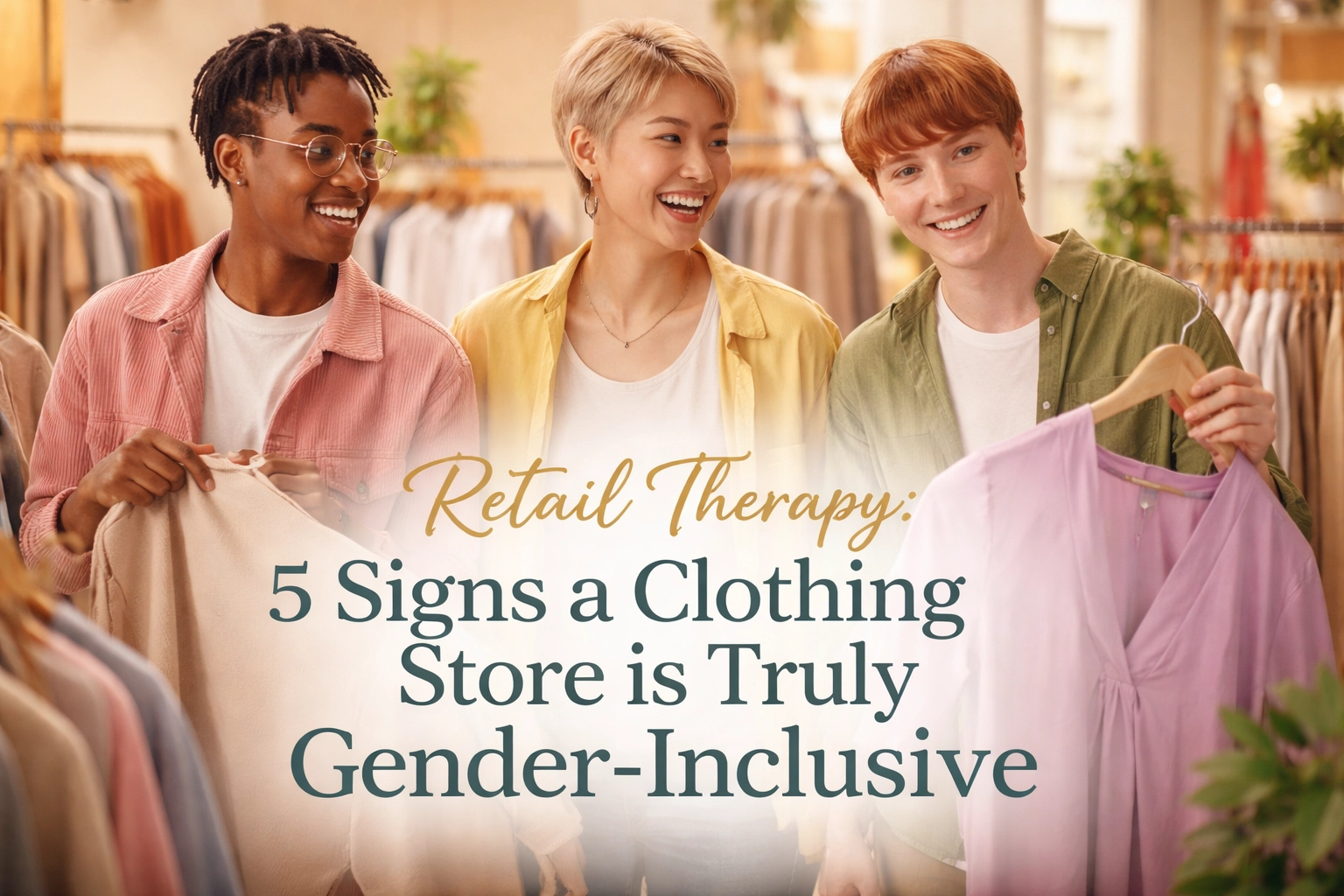
Let's be real for a second: shopping for clothes should be fun. It should be about finding that perfect jacket, those jeans that fit just right, or that dress that makes you feel like a million bucks. But for many trans and non-binary folks, walking into a clothing store can feel less like retail therapy and more like navigating a minefield.
The gendered sections. The side-eye from staff. The dreaded fitting room situation. It's exhausting, and it can turn what should be an act of self-expression into an anxiety-inducing ordeal.
But here's the good news: more and more stores are getting it right. They're rethinking how they design their spaces, train their teams, and present their products. And once you know what to look for, you can spot a truly gender-inclusive store from a mile away.
So let's break it down. Here are five clear signs that a clothing store actually walks the walk when it comes to inclusivity.
The Fitting Room Problem (And Why It Matters)
Before we dive into the signs, let's talk about the elephant in the room: or rather, the fitting room.
For many in our community, fitting rooms are ground zero for discomfort. Traditional stores often have strictly gendered fitting areas, sometimes with attendants who make assumptions based on appearance. This can lead to awkward confrontations, misgendering, or just that general feeling of being watched and judged.

It's not just about privacy. It's about dignity. It's about being able to try on clothes without feeling like you're doing something wrong. And it's one of the biggest reasons why finding transgender friendly businesses matters so much.
Now, let's get into those five signs.
1. Gender-Neutral or All-Gender Fitting Rooms
This one's at the top of the list for a reason. A store that offers gender-neutral fitting rooms is sending a clear message: everyone is welcome here.
These fitting rooms are typically individual, private spaces that anyone can use regardless of gender identity. No "men's" or "women's" signs. No awkward interactions with attendants directing you to the "correct" side. Just a door, a mirror, and the space to try on clothes in peace.
Some stores take it a step further with family or accessible fitting rooms that serve the same purpose: private, judgment-free zones where you can shop comfortably.
What to look for: Single-occupancy rooms, "All Gender" or "Gender Neutral" signage, or simply the absence of gendered fitting room sections altogether.
2. Diverse Mannequins and Visual Displays
Ever walked into a store and noticed that all the mannequins look exactly the same? Same body type, same pose, same vibe? That's a red flag.
Truly inclusive stores are moving away from the traditional binary mannequin setup. They're using mannequins designed with measurements between standard male and female forms, displaying clothing in ways that don't box customers into one category or another.

But it goes beyond just the mannequins. Look at the photos on the walls, the promotional materials, the website imagery. Do you see diversity? Different body types, different gender presentations, different people who look like they could actually be shopping there?
Visual representation matters. When a store shows diversity in how they display their clothes, they're telling you that their products are for everyone: not just one narrow idea of what a customer should look like.
What to look for: Mannequins with varied body types and presentations, promotional imagery featuring gender-diverse models, and visual displays that don't scream "this section is for men" or "this section is for women."
3. Inclusive Store Layout (Bye-Bye Gendered Sections)
You know the drill. You walk into a department store, and there it is: the clear divide. Men's on the left, women's on the right. Maybe a tiny "unisex" section tucked in a corner somewhere.
For trans and non-binary shoppers, this layout can be a nightmare. Where do you go? What if you want to browse both sections? What if you just want to find clothes that fit your body without worrying about which side of the store they're on?
Gender-inclusive stores are reimagining their layouts entirely. Instead of organizing by gender, they're organizing by style, fit, or garment type. Pants in one area, tops in another, formal wear over here, casual over there. It's a simple shift, but it makes a world of difference.
This approach lets customers browse based on personal preferences rather than arbitrary gender categories. It encourages exploration and removes that invisible barrier that makes you feel like you're trespassing in the "wrong" section.
What to look for: Store layouts organized by product type rather than gender, open floor plans that encourage browsing, and the absence of strict "men's" and "women's" signage.
4. Staff Training and Awareness
All the inclusive signage in the world doesn't mean much if the staff isn't on board. A store can have gender-neutral fitting rooms and diverse mannequins, but if an employee misgenders you or makes you feel unwelcome, the whole experience falls apart.

Truly inclusive stores invest in training their teams. Staff members understand the importance of using correct pronouns, avoiding assumptions based on appearance, and creating a welcoming environment for all customers. They know not to ask invasive questions or direct shoppers to specific sections based on perceived gender.
This kind of training shows. It shows in how employees greet you, how they offer help without making assumptions, and how they handle situations with respect and care.
What to look for: Staff wearing pronoun pins, employees who ask for your name and pronouns naturally, and a general vibe of helpfulness without judgment. Trust your gut: you can usually tell when a team has been trained to be inclusive versus when they're just going through the motions.
5. Gender-Neutral and Unisex Product Offerings
The final sign is all about the products themselves. Does the store carry clothing lines designed to transcend traditional gender distinctions? Are there options that aren't marketed specifically as "men's" or "women's"?
More brands are launching gender-neutral collections, and more stores are stocking them. These pieces are designed with fit and style in mind, not arbitrary gender categories. They're about self-expression, about wearing what makes you feel good regardless of what section it "should" belong to.
A store that actively seeks out and promotes these kinds of products is showing intentionality. They're not just tolerating gender-diverse customers: they're actively courting them.
What to look for: Dedicated gender-neutral sections or collections, brands known for inclusive sizing and design, and marketing language that emphasizes personal style over gender.
Finding Stores That Get It Right
So how do you actually find these magical, inclusive stores? That's where an inclusive business directory comes in handy.
At Trans Friendly Shops, we're building a community-driven resource to help you find lgbtq friendly businesses that truly welcome our community. Whether you're looking for a place to grab a new outfit, get a haircut, or enjoy a meal without stress, our retail listings can point you in the right direction.

No more guessing. No more walking into a store and hoping for the best. Just real recommendations from real community members who've been there.
You Deserve to Shop in Peace
At the end of the day, finding clothes should be about joy. It should be about expressing who you are, experimenting with style, and walking out of a store feeling good about yourself.
You shouldn't have to brace yourself every time you enter a fitting room. You shouldn't have to endure stares or rude comments. You deserve transgender friendly businesses that see you, respect you, and welcome you with open arms.
The good news? Those stores exist. And now you know exactly what to look for.
Happy shopping. 🛍️
Leave a Reply
You must be logged in to post a comment.